Skip to content



Vegan sneakers are no longer a niche for a few activists: today, they are a segment in their own right within responsible fashion, driven by brands that focus on innovative materials and local manufacturing, often in Portugal, Italy, or Spain. Here’s a comprehensive overview to understand what lies behind a pair of "vegan made in Europe" sneakers, and to discover the key brands in this market.
Vegan sneakers: what exactly are we talking about?
Vegan sneakers exclude all animal-derived materials: leather, suede, animal glue, wool, or down. But the real challenge doesn’t stop there. A pair can be "leather-free" yet still manufactured on the other side of the world, from virgin plastic, with a high carbon footprint. This is why more and more brands combine two commitments: the absence of animal materials and European manufacturing, typically in Portugal (the continent's leading hub for ethical shoe production), Italy, or Eastern Europe.
This dual positioning meets three consumer expectations: manufacturing traceability, working conditions regulated by European legislation, and reduced environmental impact thanks to shorter transport routes.

Materials replacing leather in vegan sneakers
Innovation is key in this sector. European brands work with biomaterials derived from agricultural waste, a way to valorize by-products rather than creating new resources:
- CornSkin (Coronet, Viridis): corn waste, mixed with bio-based binders and coated onto cotton, manufactured in Italy by Coronet, Mood Walk's choice for its quality, material durability, reduced carbon footprint, and geographical proximity.
- Piñatex: pineapple leaf fibers, one of the first vegan leathers to gain commercial traction.
- AppleSkin: vegan leather made from apple residues from the juice and cider industry.
- GrapeSkin: made from grape pomace waste from the wine industry, very common in Italy.
- CactusSkin: cactus skins mixed with bio-based binders.
- MushroomSkin: material made from mushroom mycelium.
- Cork: natural, waterproof, and lightweight material, widely used by Portuguese brands.
- Recycled microfibers and recycled PET: derived from plastic bottles or textile scraps.
These materials are then combined with natural or recycled rubber for soles, and organic cotton or recycled mesh for linings.

A European tour of vegan sneaker brands
NAE (Portugal) — Founded in Lisbon in 2008, NAE ("No Animal Exploitation") is one of the pioneers in the sector. The brand works with Piñatex, AppleSkin, cork, and recycled PET in certified and audited Portuguese factories. It is PETA-approved and donates a portion of its sales to animal welfare organizations.
MoEa (France, manufactured in Portugal) — A Parisian brand launched in 2021, MoEa has built its identity around five biomaterials, each associated with a color: apple, pineapple, cactus, corn, and grape. Its retro 90s-style sneakers are hand-assembled in Portugal, and the brand has been PETA-certified vegan since 2022. The brand now also offers new materials based on banana, mushroom, etc.
Womsh (Italy) — Founded in 2014 by Silvia Giovanardi, this Italian brand is inspired by luxury sneaker codes while working with apple and grape-based vegan leathers, as well as recycled plastic, with local manufacturing in Italy.
Bohempia (Czech Republic) — A Central European brand known for its hemp and organic cotton canvases, a more rustic alternative to plant-based leathers, with claimed artisanal manufacturing.
Good News (United Kingdom) — A British brand making sneakers from organic cotton, recycled rubber, and PET bottles, with a distinct streetwear style.
Zèta (France, manufactured in Portugal) — A Bordeaux-based brand launched in 2019 (commercialized in 2020), hand-assembled in Portugal by skilled artisans. Zèta stands out for its materials derived from agri-food waste: vegan leather made from grape pomace for the Alpha model, coffee leather for the Moka model, and corn-based vegan leather for other models, combined with recycled plastic and a recycled cork sole.
Meeko (France, manufactured in Europe) — Founded by two friends, Guillaume and Maxime, Meeko designs vegan sneakers with an aesthetic inspired by wildlife, featuring recycled plastic mesh collected from the sea, a natural and recycled rubber sole, and organic cotton laces and linings. The brand donates a portion of its profits to NGOs protecting endangered species through its #STEPCLOSER program.
Focus on the vegan sneaker brand Mood Walk
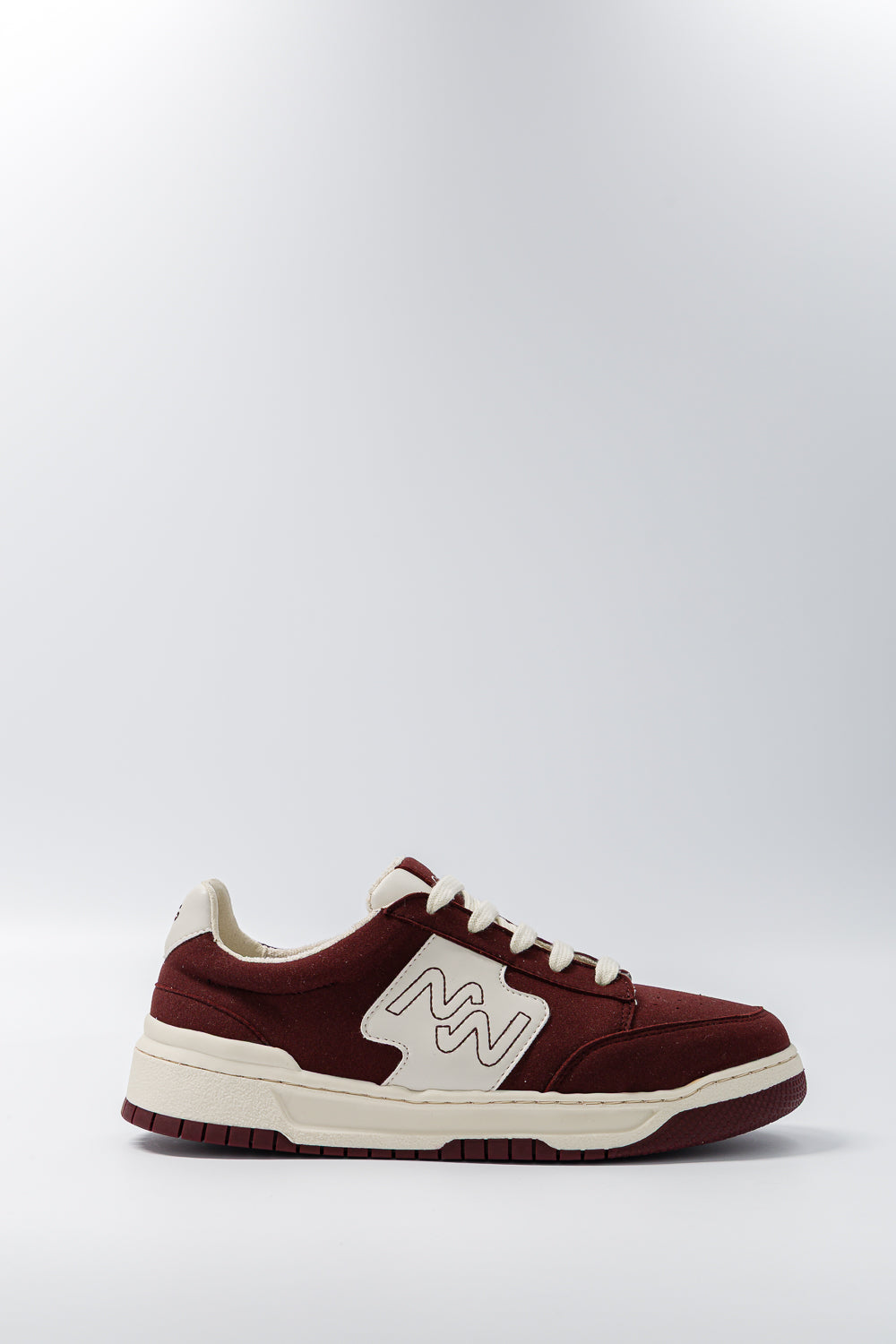
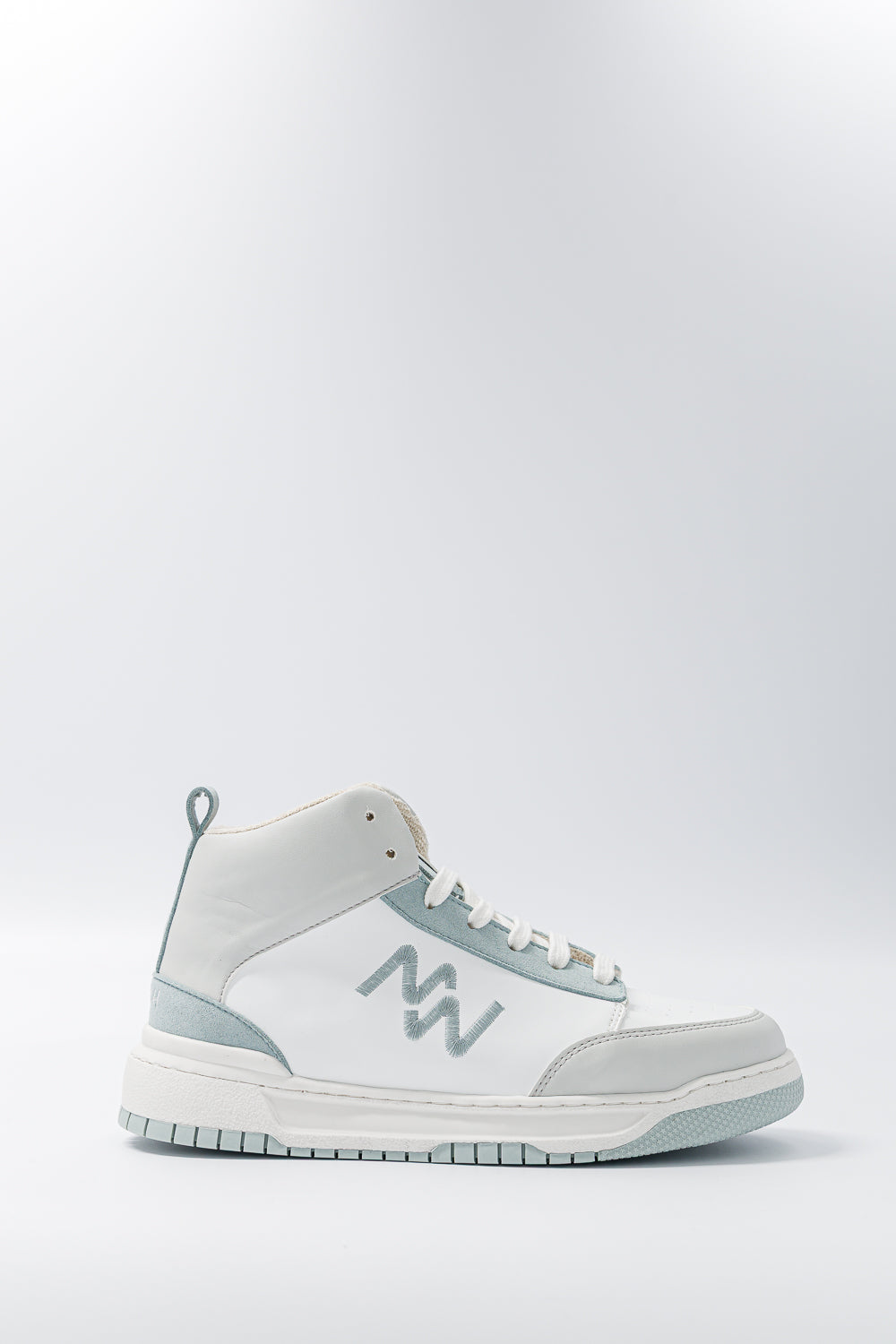
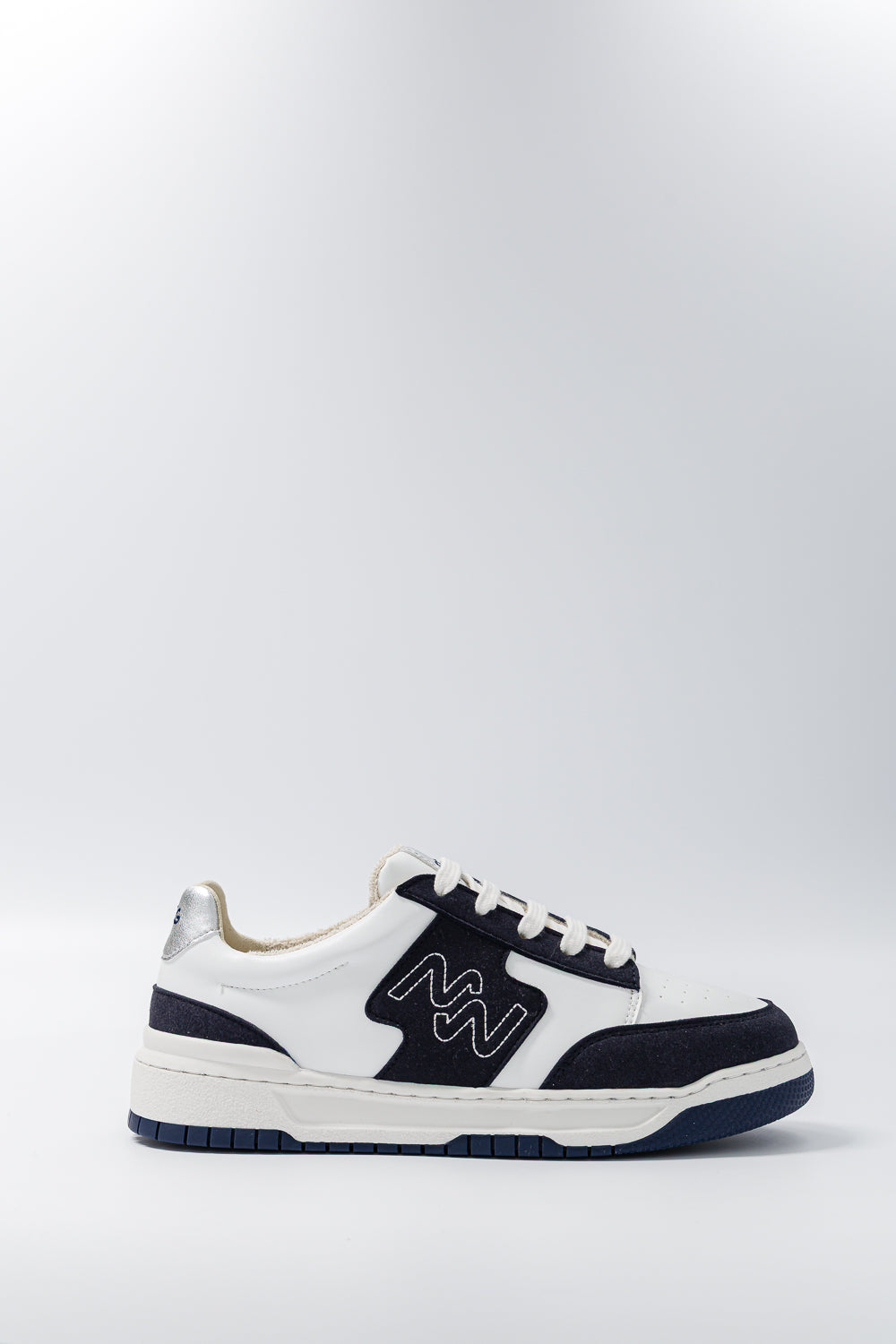
Among these European brands, Mood Walk holds a special place. Founded in 2022 by Bénédicte Guénégan, after nearly 20 years in consulting, the French brand designs vegan sneakers hand-manufactured in Vizela, north of Porto, in a workshop that the founder regularly visits to ensure working conditions.
Mood Walk models are made with a non-food corn-based vegan leather (from Italy), combined with a lining and inserts of vegan microsuede (from Spain), a sole made of natural and recycled rubber (from Portugal), and laces of recycled cotton. The packaging is made from recycled cardboard. This short-circuit approach between Italy, Spain, and Portugal significantly reduces CO2 emissions compared to a classic leather sneaker.
Mood Walk also stands out with its concept of interchangeable straps: several models come with removable straps carrying positive and committed messages, which can be changed according to one's outfit or mood. For each pair sold, the brand donates 2 euros to an association dedicated to girls' education in Cambodia: Toutes à l'école.

How to choose your pair of vegan "made in Europe" sneakers?
To navigate through marketing promises, a few concrete criteria can help distinguish truly committed brands:
- The precise manufacturing location: a mention like "designed in France, made in Portugal" (or Spain or Italy) is more reliable than a simple "eco-friendly" without a geographical origin.
- Certifications: the PETA-Approved Vegan label guarantees the absence of animal materials at all stages, not just on the shoe upper (adhesives, linings, labels).
- Detailed composition of vegan sneakers: serious brands specify the exact composition of their sneakers.
- The sole: natural or recycled rubber rather than virgin plastic.
- Announced durability: wear resistance, availability of spare parts or repair services.

In summary, "made in Europe" vegan sneakers have become professionalized: biomaterials derived from agricultural waste effectively replace animal leather, Portuguese and Italian manufacturing guarantees strong traceability, and certifications like PETA-Approved make it possible to verify commitments beyond marketing claims. From NAE to MoEa and Mood Walk, each brand has developed its own signature, from retro style, minimalism, to streetwear influence — enough to find a pair that aligns with your values without sacrificing style.